Technical Guides

Choosing a VSD for Commercial HVAC and Cooling Towers
What to look for in a VSD for air handling units, cooling towers and chilled-water pumps: humidity and IP rating, harmonics, BMS protocols and cooling tower…
Read moreCompact, reliable Carlo Gavazzi soft starters for smooth motor control — where the space-saving RSGD range fits, and why buying through a trusted authorised distributor protects the value.
14 May 2026 · 9 min read · Trans-Digi Global
Industries buy Carlo Gavazzi soft starters through authorised channels for the same reason they specify the brand: they want the published performance, the certifications and the manufacturer support to apply to the unit in their panel. For the compact RSGD range, that published performance is specific: starting current cut to about 3.5 times motor current, Class 10 overload protection built in, and ratings from 12 to 100 A in 45 mm and 75 mm wide housings.
In this article
A soft starter is an electronic device that ramps up the voltage to a fixed-speed AC motor at start, and ramps it down at stop, to limit inrush current and mechanical shock. Trans-Digi Global supplies the Carlo Gavazzi RSGD soft starter in Singapore, and as our partners page states, everything we sell comes through authorised channels, with the documentation to prove it.
Carlo Gavazzi is an international group that designs, manufactures and markets electronic equipment for industrial and building automation, including sensors, monitoring relays, solid-state relays, energy management systems and soft starters. Its products are marketed across Europe, the Americas and Asia-Pacific through 24 of its own sales companies and more than 60 independent national distributors (Carlo Gavazzi). Its typical customers include original equipment manufacturers (OEMs) of packaging, conveying and HVAC equipment, which is where the compact RSGD fits best.
Singapore’s National Environment Agency set minimum energy performance standards (MEPS) for motors at IE3 level, noting that electric motors accounted for about 80% of the 2015 electricity consumed by companies regulated under the Energy Conservation Act, and that electricity typically makes up over 95% of a motor’s life-cycle cost (NEA consultation on MEPS for motors).
Higher-efficiency motors bring a side effect at start-up. Carlo Gavazzi’s RSGD/RSGT brochure compares typical starting currents as multiples of motor rated current:
| Starting method | Typical starting current (× motor rated current) |
|---|---|
| Direct-on-line (DOL), IE4 motor | 15 |
| DOL, IE3 motor | 10 |
| DOL, IE2 motor | 6 |
| Carlo Gavazzi RSGD (2-phase control) | 3.5 |
| Carlo Gavazzi RSGT (3-phase control) | 3 |
Lower starting current, the brochure notes, “avoids nuisance trips of protection devices and reduces mechanical shocks during motor starts.” That matches the US Department of Energy’s observation that starts and stops are hard on motors “because of repeated stresses from starting currents, and acceleration and deceleration of mechanical components” (DOE motor and drive system sourcebook).
From the Carlo Gavazzi RSGD datasheet:
Soft starters are rated at a stated surrounding temperature, and Singapore panels often run warm. The RSGD datasheet gives the derating clearly:
| Model | Rated current at 40 °C | At 50 °C | At 60 °C |
|---|---|---|---|
| RSGD..55 | 55 A | 50 A | 46 A |
| RSGD..70 | 70 A | 64 A | 59 A |
| RSGD..85 | 85 A | 78 A | 71 A |
| RSGD..100 | 100 A | 88.5 A | 77 A |
The brochure adds that when the temperature inside the panel exceeds the soft starter’s rated temperature, typically 40 °C, the unit must be derated. Size for the panel’s real internal temperature, not the room’s.
A soft starter only manages the start and stop; once the motor is up to speed, the RSGD switches to bypass and the motor runs at full speed from the supply. A variable speed drive controls speed continuously. The US Department of Energy’s Motor Systems Tip Sheet #11 explains why that matters on centrifugal pumps and fans: power varies with the cube of speed, so a 20% speed reduction can cut input power by about 50%. If the load must run at full speed whenever it runs, a soft starter is the simpler and more compact choice. If flow or pressure varies through the day, a VSD is worth evaluating for the energy saving. For a full comparison with a decision matrix by pump duty, see soft starter vs VFD: which should your pump use?
That last point matters with soft starters. The RSGD is designed for compact, fixed-speed duties up to 100 A. For larger motors or more advanced protection and connectivity, we may point you to the Schneider ATS480, the Schneider ATS22 or the Himel HASXS. Where the process needs speed control, a VSD is the right tool.
Our published soft-starter projects use the Himel HASXS rather than the RSGD, but they show the application discipline we bring to any soft starter:
A compact three-phase soft starter for AC induction motors up to 100 A, with two-phase control, a self-learning start algorithm, integrated bypass and, on most models, built-in Class 10 overload protection.
Carlo Gavazzi’s brochure gives a typical 3.5 times motor rated current with the RSGD, against 6 to 15 times for direct-on-line starting depending on motor efficiency class.
Yes, on the VD210, VX210, VX310 and VX311 models (Class 10). For class 20 or 30 duties an external overload device may be required.
Yes. Pumps are a typical application, and the torque-controlled soft stop helps prevent water hammer.
Both are Carlo Gavazzi self-learning soft starters. The RSGD controls two phases; the RSGT controls all three, giving a typical further 10% reduction in starting current and less than 2% current imbalance at start, per the brochure.
Our RSGD product page lists local Singapore stock. Send us the motor FLC, voltage and application and we will confirm the model.
Send the motor rating, voltage and application and we will confirm the right RSGD, or a better-suited alternative, and its availability. See the Carlo Gavazzi range, our services, or contact us.
Related reading: Why Choose an Authorised WEG Distributor in Singapore · Schneider ATS22: A Reliable Soft Starter · Why the Himel HDR3S Thermal Overload Relay Is Essential
Send Jason the model or your motor rating — we'll confirm availability the same business day.
WhatsApp UsWhat to look for in a VSD for air handling units, cooling towers and chilled-water pumps: humidity and IP rating, harmonics, BMS protocols and cooling tower…
Read more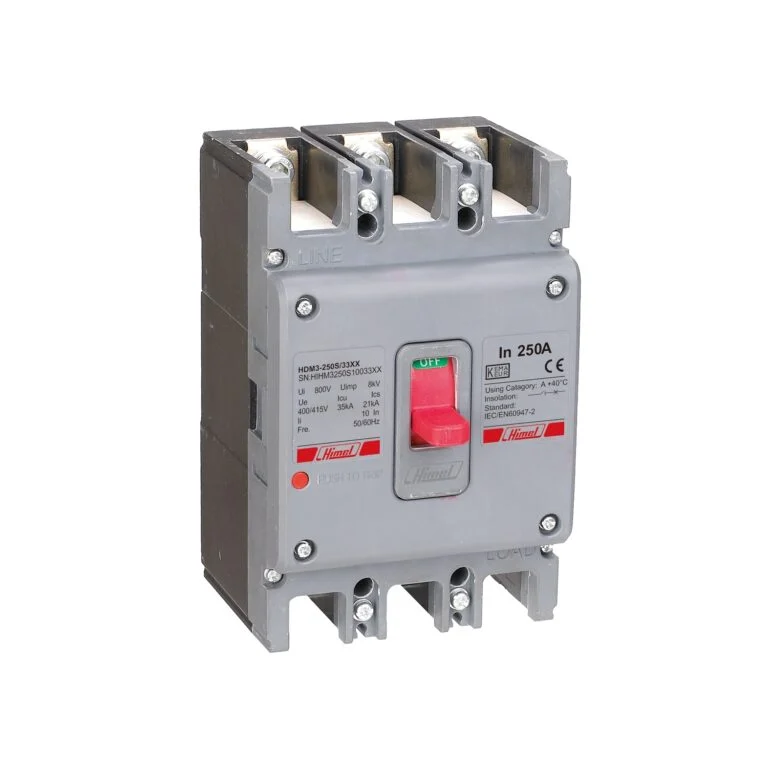
MCCB or MCB? How breaking capacity, the IEC 60898-1 and IEC 60947-2 standards, selectivity and temperature derating decide the right breaker for each board.
Read more
Soft starter or VFD for your pump? Compare starting current, running energy, harmonics and cost, with a decision matrix by pump duty, worked numbers and Singapore…
Read moreSend us your motor rating, voltage, application and quantity. We'll get back to you fast.