Technical Guides

Choosing a VSD for Commercial HVAC and Cooling Towers
What to look for in a VSD for air handling units, cooling towers and chilled-water pumps: humidity and IP rating, harmonics, BMS protocols and cooling tower…
Read moreThe small device that saves motors — how the HDR3S protects against overload and phase loss, and how to set it correctly on your starter.
4 July 2026 · 8 min read · Trans-Digi Global
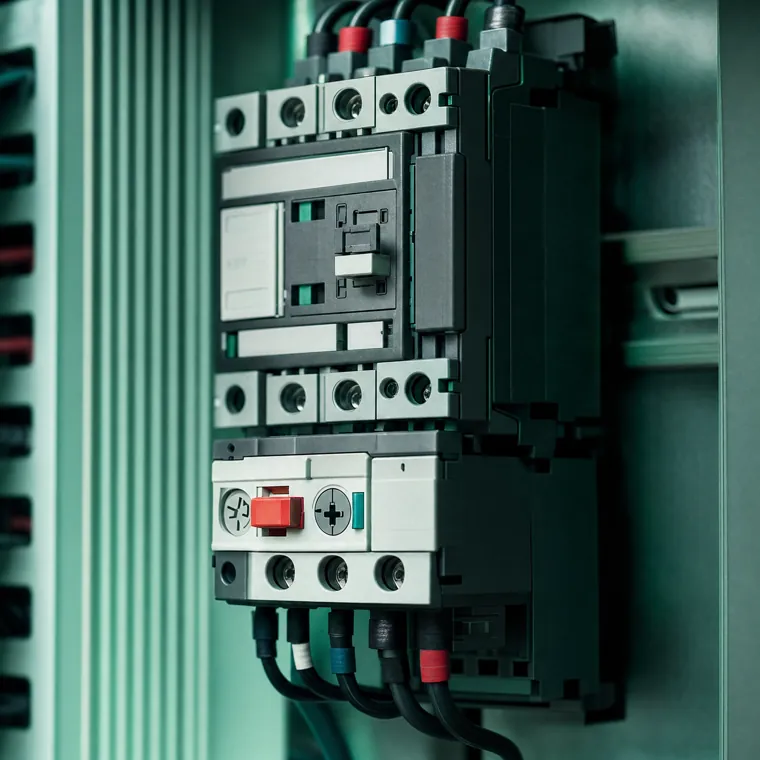
A thermal overload relay is the device that switches a motor off when it draws more current than it should for too long, before the windings overheat. The Himel HDR3S does this with a bimetal element set to the motor’s full-load current, and it also trips on phase failure, the loss of one supply phase. Fitted to a contactor, it protects against the slow, heat-driven damage that a circuit breaker’s short-circuit protection is not designed to catch.
In this article
Trans-Digi Global supplies the Himel HDR3s thermal overload relay from local Singapore stock, together with matching HDC3 contactors, as an authorised Himel partner.
Heat is what ends a motor’s life. The US Department of Energy’s motor and drive system sourcebook sets out the numbers:
An overload relay targets exactly these conditions: sustained over-current, a stalled or jammed load, and the current imbalance that follows a lost phase.
Inside the relay, a bimetal strip carries (or is heated by) the motor current in each phase. As current rises above the set value, the strips heat and bend until they release a trip mechanism. That opens the relay’s normally closed auxiliary contact, which is wired into the contactor’s coil circuit, so the contactor drops out and the motor stops.
From the Himel product data sheet for the HDR3S2513 (9 to 13 A):
Himel’s Panel Builder brochure lists HDR3s frame currents of 25, 36 and 93 A and the IEC/EN 60947-4-1 standard, and Himel’s HDR3s product page gives trip class 10A. The 25 A-frame setting ranges we stock are below; each links to its datasheet on our product page.
| Reference | Setting range (A) | Reference | Setting range (A) |
|---|---|---|---|
| HDR3S251 | 0.63 to 1 | HDR3S256 | 4 to 6 |
| HDR3S251P6 | 1 to 1.6 | HDR3S258 | 5.5 to 8 |
| HDR3S252P5 | 1.6 to 2.5 | HDR3S2510 | 7 to 10 |
| HDR3S254 | 2.5 to 4 | HDR3S2513 | 9 to 13 |
Trip class tells you how long the relay allows a motor to run at a high overload, as at start-up, before it trips. IEC 60947-4-1 defines four classes for thermal overload relays: 10A, 10, 20 and 30. As Schneider Electric’s guidance on trip classes summarises, classes 10A and 10 suit normal-duty motors, class 20 is recommended for heavy-duty motors, and class 30 is needed for very long starts.
The HDR3S is a class 10A relay, which suits the majority of pumps, fans and general machinery that reach full speed quickly. For a high-inertia load with a long run-up, such as a large fan or a loaded conveyor, check the motor’s starting time against the relay’s trip curve before you commit.
| Option | Overload protection | Short-circuit protection | Typical choice when |
|---|---|---|---|
| Contactor + HDR3S thermal relay + MCCB or fuses | Yes, adjustable to FLC | By the upstream device | Remote or automatic control via the contactor is needed |
| Himel HDP6 motor circuit breaker | Yes | Yes, built in | A compact single device for isolation and protection is preferred |
| VSD or soft starter | Electronic motor protection in the drive | By the upstream device | The motor needs speed control or a controlled start |
The combinations are not mutually exclusive. Many panels use a motor circuit breaker for isolation and short-circuit protection, with a contactor and overload relay for control.
Our HDR3s product page lists the typical applications: motor protection in motor control centres, industrial machinery, pumps, compressors and conveyors. In Singapore buildings that covers a long list of small motors that run every day without anyone watching them, such as transfer and booster pumps, ventilation and exhaust fans, cooling-tower fans and small process machinery. These are the motors most likely to suffer a slow overload from a clogged filter, a worn bearing or a failed phase, and the least likely to be noticed until they stop.
Larger building-services motors on our project references, such as chilled-water pumps, cooling towers and carpark ventilation fans, are usually controlled by VSDs or soft starters with their own electronic motor protection. Direct-on-line and star-delta starters for smaller motors still rely on a contactor and thermal overload relay.
Sustained overload, stalled or jammed loads and, on the HDR3S, phase failure. It does not protect against short circuits; that is the job of an upstream MCCB, motor circuit breaker or fuses.
Class 10A, per Himel’s HDR3s product information. Classes 10A and 10 suit normal-duty motors.
The motor’s full-load current from the nameplate, at the supply voltage it runs on.
It is designed for coordination with Himel HDC3 contactors. Tell us the motor rating and we will confirm the matching contactor and relay.
The HDR3S offers both. Manual reset is the safer default where an unexpected restart could cause harm; automatic reset can suit remote, unattended equipment where the control logic manages restarts.
Yes. The HDR3s range is held in local stock with datasheets available. Contact us with the motor FLC and we will reply the same business day.
Send the motor nameplate or full-load current and we will confirm the HDR3S range, the matching contactor and the upstream protection. Browse the Himel range or contact our team.
Related reading: Why Contactor Selection Matters for Reliable Motor Control · The Himel HDM3 MCCB Explained · How the Himel HAVXS Expert VSD Minimises Motor Wear
Send Jason the model or your motor rating — we'll confirm availability the same business day.
WhatsApp UsWhat to look for in a VSD for air handling units, cooling towers and chilled-water pumps: humidity and IP rating, harmonics, BMS protocols and cooling tower…
Read more
MCCB or MCB? How breaking capacity, the IEC 60898-1 and IEC 60947-2 standards, selectivity and temperature derating decide the right breaker for each board.
Read more
Soft starter or VFD for your pump? Compare starting current, running energy, harmonics and cost, with a decision matrix by pump duty, worked numbers and Singapore…
Read moreSend us your motor rating, voltage, application and quantity. We'll get back to you fast.