Technical Guides

Choosing a VSD for Commercial HVAC and Cooling Towers
What to look for in a VSD for air handling units, cooling towers and chilled-water pumps: humidity and IP rating, harmonics, BMS protocols and cooling tower…
Read moreSoft starter or VFD for your pump? Compare starting current, running energy, harmonics and cost, with a decision matrix by pump duty, worked numbers and Singapore fire pump projects.
Use a soft starter when the pump runs at one fixed duty and you only need a gentler start and stop. Use a variable frequency drive (VFD) when the flow or pressure the pump must deliver changes through the day, because only a drive can slow the pump down and cut running energy. A soft starter limits starting current to roughly 3 to 4 times motor current and then steps out of the circuit; a VFD keeps starting current within its own rating and controls speed continuously, at the cost of a higher price, around 3–4% losses at full speed and current harmonics that must be managed.
Below: how the two differ, a decision matrix by pump duty, worked energy numbers, how fire pumps fit in, and what we check on site, using manufacturer data and our own Singapore projects.
In this article
A soft starter is a solid-state motor starter covered by IEC 60947-4-2. It uses thyristors to raise the voltage to the motor gradually, limiting the current and torque during acceleration, then closes a bypass contactor so the motor runs directly from the supply. The Himel HASXS we supply is a typical example. Its 132 kW datasheet lists voltage-ramp starting, an integrated bypass, and start and stop times adjustable from 2–100 s and 1–50 s.
A VFD rectifies the incoming AC supply to DC and then rebuilds an AC output at whatever frequency and voltage the motor needs. Because motor speed follows frequency, the pump can run at any speed for as long as it runs. Pump drives such as the Himel HAVSP Smart Pump Series add pressure control and protection functions on top.
| Soft starter | VFD | |
|---|---|---|
| Starting current | About 3–4 × rated current: 300% for a centrifugal pump on the ATS480, about 3.5 × on the RSGD | Within the drive’s rating: 75 A continuous, 90 A for 1 minute on the 37 kW HAVSP |
| Speed during running | Full speed only (motor on bypass) | Variable. The HAVSP output range is 0–599 Hz |
| Losses at full speed | Low once bypassed (Himel, HASES) | About 3–4%: 96–97% typical drive efficiency at 75–100% load (US DOE) |
| Running energy saving | None. It does not change speed | Large on variable-flow pumps, small or negative on fixed-duty pumps |
| Stopping | Torque-controlled soft stop to reduce water hammer (ATS480, RSGD) | Controlled ramp-down to any speed, plus PID, sleep and multi-pump functions |
| Current harmonics | The motor runs straight from the supply once bypassed | Drawn continuously; check against the project limit |
The starting problem both devices solve is the direct-on-line (DOL) start. Schneider Electric’s guide to DOL starters puts the inrush of a motor switched straight onto the supply at typically 6 to 8 times its rated running current. Carlo Gavazzi’s RSGD brochure adds that newer high-efficiency motors can draw more: about 10 × for IE3 and up to 15 × for IE4 motors.
Decide from the pump’s duty, not the price list. The Hydraulic Institute and Europump guide to variable speed pumping recommends starting with a duration diagram: how many hours a year the system needs each flow rate. Then work through these steps:
A fixed duty or high static head points to a soft starter. Varying demand on a friction-dominated system, such as a chilled-water loop, points to a drive, whose capital cost the Hydraulic Institute notes can often be offset by removing control valves, bypass lines and conventional starters.
Applied to common pump duties in Singapore buildings and plants (a starting point, not a substitute for the consultant’s calculations):
| Pump duty | Typical demand profile | Usual choice | Why |
|---|---|---|---|
| Fire pump (wet riser, sprinkler, hose reel) | Starts on demand, then runs at full duty | Soft starter, or a drive with fire override where the design calls for it | The job is a reliable start and full output. Protection settings must follow Fire Code clause 5.2.3 |
| Transfer pump filling a roof tank | Fixed flow, high static head, on/off by level | Soft starter | Little to save by slowing down; a soft stop limits water hammer in the riser |
| Domestic water booster set | Demand varies hour by hour | VFD (pump drive with PID and sleep) | Holds set pressure and avoids running at full speed at low demand |
| Chilled-water secondary pump, variable flow | Load follows cooling demand | VFD | Friction-dominated loop, so speed reduction gives large savings |
| Constant-flow chilled- or condenser-water pump | Fixed flow while the chiller runs | Soft starter (or a drive used for balancing) | A soft starter tames the start on large motors; a drive saves energy only if the flow can drop |
| Sump or sewage ejector pump | Frequent level-switched starts | Soft starter sized for the starts per hour | Fixed duty; check the starter’s starts-per-hour rating |
The Carbon Trust’s VSD technology guide agrees: where demand already matches the motor’s full-load capacity, a VSD “would only add to the overall system losses”.
Take a 37 kW centrifugal pump motor on 400 V, drawing 30 kW at its duty point, priced at the SP Group regulated tariff of 28.59 cents/kWh before GST (October–December 2026). Your contracted rate may differ.
On bypass, the soft starter adds almost nothing. A VFD at 50 Hz adds its own losses: US DOE Motor Systems Tip Sheet #11 gives 97% typical efficiency at full load for a 50 hp drive, so 30 kW ÷ 0.97 = 30.9 kW. The extra 0.9 kW over 3,000 hours is about 2,800 kWh, roughly S$800 a year more, before the higher purchase price.
Now the same pump serves a friction-dominated loop that could run at 80% speed. Power varies with the cube of speed (0.8³ = 0.51). Allowing 95% drive efficiency at part load (DOE table): 30 kW × 0.51 ÷ 0.95 ≈ 16.2 kW, about 13.8 kW less than full speed, or roughly 83,000 kWh and S$23,700 a year.
Treat that as a ceiling: a throttled pump does not draw full power at reduced flow, and static head cuts the saving. Our article on how the Schneider ATV630 cuts pump and fan energy covers the measurement.
Full-load current is about 67 A (assuming 0.86 power factor and 93% efficiency; check the nameplate):
| Starting method | Peak starting current | Basis |
|---|---|---|
| Direct-on-line | About 400–535 A | 6–8 × rated current (Schneider Electric) |
| Soft starter | About 200 A | 300% current limit typical for a centrifugal pump (ATS480 catalogue), 5–15 s start |
| VFD (37 kW HAVSP) | 75 A continuous, up to 90 A for 1 minute | Himel HAVSP4T0370P datasheet, normal duty |
A fire pump’s duty is simple, but a failed start is serious. SCDF’s Fire Code 2023, clause 5.2.3 sets rules for these motor circuits. Cable connections must be protected by HRC fuses or MCCBs with magnetic release, able to carry the motor’s stalled current for at least 75% of the time that would damage the windings. Any no-volt release must reset automatically, and thermal overload trips are not permitted. Clause 6.8 requires the fire pumping system to keep performing when a pump or its control system is out of service.
Our fire pump references show both approaches:
Neither device is right for every fire pump; the settings must follow the Fire Code and the design. On chilled-water plant, our Gateway East project used more than 10 HASXS units (37–55 kW) as standby starters for motors in service for over 10 years.
A drive’s rectifier draws current in pulses, adding harmonic distortion. IEEE 519 is commonly used to set limits, and specifications may add their own: on our ST Aerospace project, each drive had to stay below 35% THDi (total harmonic current distortion), and we measured every one.
US DOE Motor Systems Tip Sheet #15 adds that cable runs of 50 feet (about 15 m) or more from a PWM drive almost always need mitigation, such as a load reactor or dV/dt filter, and the Hydraulic Institute recommends insulated non-drive-end bearings above 100 kW.
Both need a proper enclosure: the HASXS is IP00 and the HAVSP IP20, each rated for non-condensing humidity only.
We supply, test and commission both:
For product-level detail, see our guides to the Schneider ATS480 soft starter, the Schneider ATS22, Carlo Gavazzi soft starters, the Himel Smart Pump Series and how VSDs improve motor efficiency. For a recommendation, send the pump duty and motor nameplate through our contact page.
A soft starter ramps the voltage up to start the motor smoothly, then bypasses itself so the motor runs at full speed. A VFD controls the motor’s frequency and voltage for the whole run, so it can change the speed. Only a VFD can save running energy.
Use a soft starter if the pump runs at one fixed duty, such as a transfer or fire pump, and you only need to reduce starting current and water hammer. Use a VFD if the flow or pressure demand varies, such as on a booster set or a variable-flow chilled-water loop.
Choose a soft starter when the motor must run at full speed whenever it runs, when the budget or panel space is tight, or when you want to avoid adding drive harmonics. On a fixed-duty pump, a VFD adds roughly 3–4% losses and saves nothing.
Only when the pump can run slower. On centrifugal pumps, power falls with the cube of speed, so running at 80% speed needs about half the power. At full speed, a soft starter on bypass is slightly more efficient than a drive.
Yes, if the duty varies enough to justify it. Check the motor insulation and cable length, add a pressure or flow sensor for control, plan for harmonics and heat in the panel, and keep a check valve or other shut-off function at the pump discharge.
Yes. We have supplied 132 kW and 160 kW Himel HASXS soft starters for LTA fire pump systems. Drives with fire override settings are also used on fire pump systems. Either way, the settings must follow SCDF Fire Code 2023 and the consultant’s design.
Send Jason the model or your motor rating — we'll confirm availability the same business day.
WhatsApp UsWhat to look for in a VSD for air handling units, cooling towers and chilled-water pumps: humidity and IP rating, harmonics, BMS protocols and cooling tower…
Read more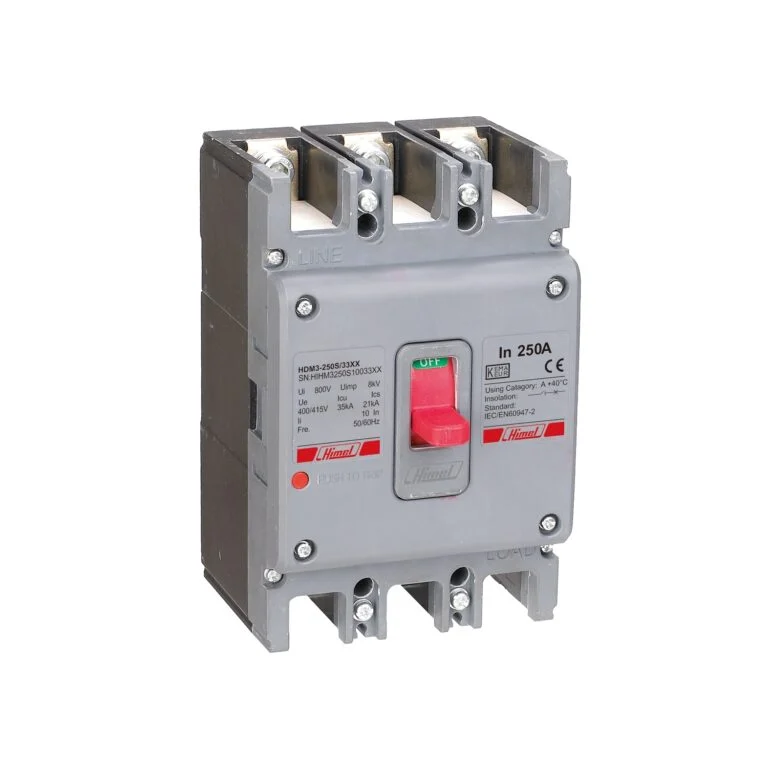
MCCB or MCB? How breaking capacity, the IEC 60898-1 and IEC 60947-2 standards, selectivity and temperature derating decide the right breaker for each board.
Read more
To replace a variable speed drive on site, first prove the drive has actually failed, then record everything the old unit was doing before you remove…
Read moreSend us your motor rating, voltage, application and quantity. We'll get back to you fast.