Technical Guides

Choosing a VSD for Commercial HVAC and Cooling Towers
What to look for in a VSD for air handling units, cooling towers and chilled-water pumps: humidity and IP rating, harmonics, BMS protocols and cooling tower…
Read moreSoft starts, controlled speed, energy savings and built-in protection — how Himel's Expert-series drive extends the life of pumps, fans and conveyors.
4 July 2026 · 9 min read · Trans-Digi Global
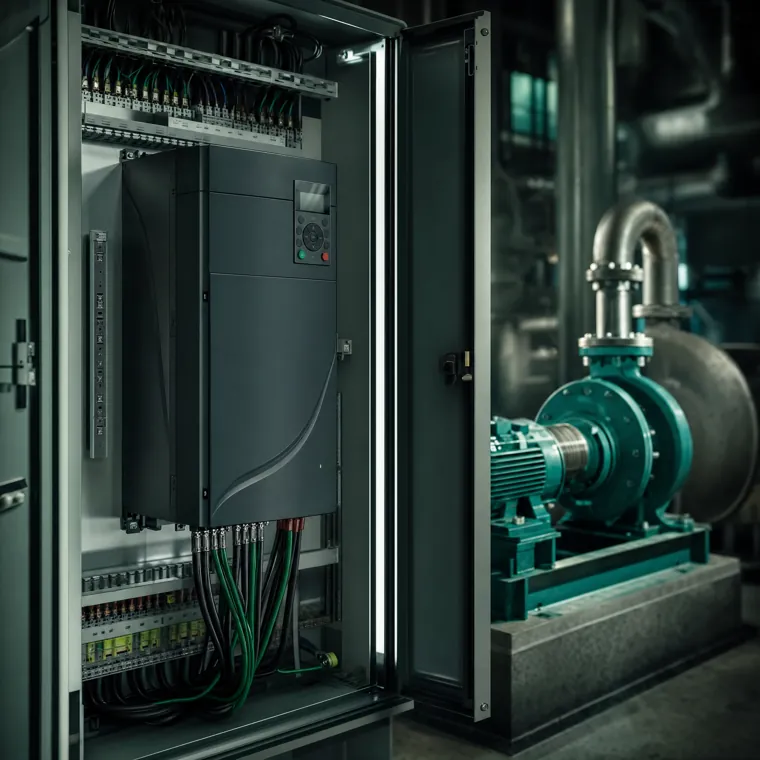
The Himel HAVXS Expert Series VSD reduces motor wear in four ways: it starts the motor without a current surge, it ramps speed up and down smoothly instead of applying full torque instantly, it runs the motor only as fast as the process needs, and it trips before an electrical fault turns into a burnt winding. This article explains each mechanism with figures from the Himel datasheet and independent motor-system research, and shows what to check so a drive protects the motor rather than stressing it.
In this article
A variable speed drive (VSD), also called a variable frequency drive or inverter, controls an AC motor’s speed by changing the frequency and voltage of its supply. Trans-Digi Global supplies the Himel Expert Series (HAVXS) in Singapore as an authorised Himel partner, with sizing, testing and commissioning support.
The US Department of Energy’s motor and drive system sourcebook identifies the usual culprits:
A well-applied VSD addresses all four. A badly applied one can add new stresses, which is why the second half of this article covers commissioning checks.
The table summarises the relevant features from the Himel product data sheet for the HAVXS4T0110G0150P (11 kW heavy duty / 15 kW light duty, 380 V three-phase). Other ratings in the series follow the same platform.
| Feature | HAVXS datasheet value | Why it matters for wear |
|---|---|---|
| Acceleration / deceleration ramps | Linear or S-curve, each adjustable from 0.1 s to 60 h | No torque shock on couplings, belts or gearboxes |
| Motor control | Sensorless vector (SVC) and V/f | Steady torque at low speed without overheating |
| Speed accuracy | ±0.1% of nominal speed (open loop, 1:100 range) | Process runs at the speed it needs, not faster |
| Overload capacity (heavy duty) | 150% for 1 min, 180% for 3 s | Rides through short peaks without nuisance trips |
| Protection functions | Overcurrent, overvoltage, undervoltage, overheating, overload, current limiter | Trips before a fault damages the winding |
| Braking | DC injection to standstill (30 s); built-in braking unit | Controlled stops instead of coasting or mechanical shock |
| Other functions | Automatic voltage regulation (AVR), energy-saving mode, auto-read of motor parameters | Stable voltage at the motor; correct motor model |
Across the range, our Expert Series product page lists a power range of 0.75 to 850 kW depending on model and duty, normal-duty and heavy-duty ratings, PID control, multi-speed operation, programmable I/O and Modbus RTU. Himel’s Panel Builder brochure positions the EXPERT Standard for machines and advanced general-purpose applications, at 0.7 to 850 kW on 380 to 440 V three-phase supply.
Started direct-on-line, an induction motor draws a large current surge and develops a torque jolt that hits the shaft, coupling and driven machine. A VSD starts the motor at low frequency and raises it gradually, so current stays within the drive’s limit. The DOE sourcebook notes that VSDs “often have inherent soft-start capabilities that can limit starting currents.” On the HAVXS, the current limiter and the adjustable ramp set how gently that happens.
Couplings, belts, gearboxes and pump impellers wear fastest under sudden torque changes. With ramps adjustable from 0.1 s to 60 h and an S-curve option that softens the start and end of each ramp, the HAVXS lets the commissioning engineer match acceleration to the inertia of the load. On a conveyor, that means no slipping or spilling at start; on a pump, a controlled stop helps limit pressure surges in the pipework.
For centrifugal pumps and fans, the affinity laws say power varies with the cube of speed. The DOE’s Motor Systems Tip Sheet #11 gives the practical result: reducing speed (and flow) by 20% can reduce input power by about 50%. Less power means less heat in the motor and less wear on bearings and seals. For constant-torque loads such as conveyors and compressors, power varies roughly in line with speed, so the gain is smaller but the mechanical benefit of not over-running remains.
There is a limit: a standard self-cooled motor’s fan slows down with the motor. For long periods at low speed with high torque, check the motor’s cooling and derating with the motor manufacturer.
The HAVXS monitors current, DC-bus voltage and its own temperature continuously. Overcurrent, overvoltage, undervoltage and overload trips stop the motor before a fault becomes a rewind. With the motor nameplate data entered (the drive can read motor parameters automatically), the overload model is based on the actual motor, not a generic setting.
A drive’s fast-switching output is not a pure sine wave. The DOE sourcebook warns that “misapplying VFDs to in-service motors can prevent expected energy savings from materializing, or can quickly cause motor failures,” pointing to voltage overshoots and bearing currents. The international guidance on motors fed from converters is IEC TS 60034-25, which covers insulation stress and shaft currents, while drive-system ratings are covered by IEC 61800-2.
Practical checks at commissioning:
Our published project references are mostly Himel Smart Pump (HAVSP) VSDs and HASXS soft starters rather than the HAVXS, but they show the same motor-care principles in practice:
See all project success stories.
It is Himel’s Expert Series (EXPERT-Standard) variable speed drive for three-phase motors, aimed at machines and demanding general-purpose applications, with sensorless vector and V/f control, PID, and Modbus communication.
It can, by removing starting surges, softening mechanical shocks, reducing speed where the process allows, and tripping on electrical faults. It must be applied correctly, with attention to motor suitability, cable length and settings.
Heavy duty for loads with high starting torque or frequent overloads, such as conveyors, compressors and crushers. Light duty suits variable-torque loads such as fans and centrifugal pumps. On the 11 kW reference, heavy duty allows 150% current for 1 minute.
Often, yes, after checking the motor’s condition and suitability for converter supply. Our Singapore EXPO and Gateway East projects both involved motors more than ten years old.
0.75 to 850 kW, depending on model and duty rating, per our product page. Datasheets for each rating are available to download.
Yes. Our scope covers supply, installation support, testing and commissioning. Send us the motor nameplate, application and quantity.
Send the motor rating, voltage, application and quantity, or a photo of the motor nameplate, and we will confirm the right HAVXS rating and duty, check stock and come back the same business day. Explore the Himel range, our services, or contact us.
Related reading: Understanding Himel VSD X Series · How Variable Speed Drives Improve Motor Efficiency · Why the Himel HDR3S Thermal Overload Relay Is Essential for Motor Safety
Send Jason the model or your motor rating — we'll confirm availability the same business day.
WhatsApp UsWhat to look for in a VSD for air handling units, cooling towers and chilled-water pumps: humidity and IP rating, harmonics, BMS protocols and cooling tower…
Read more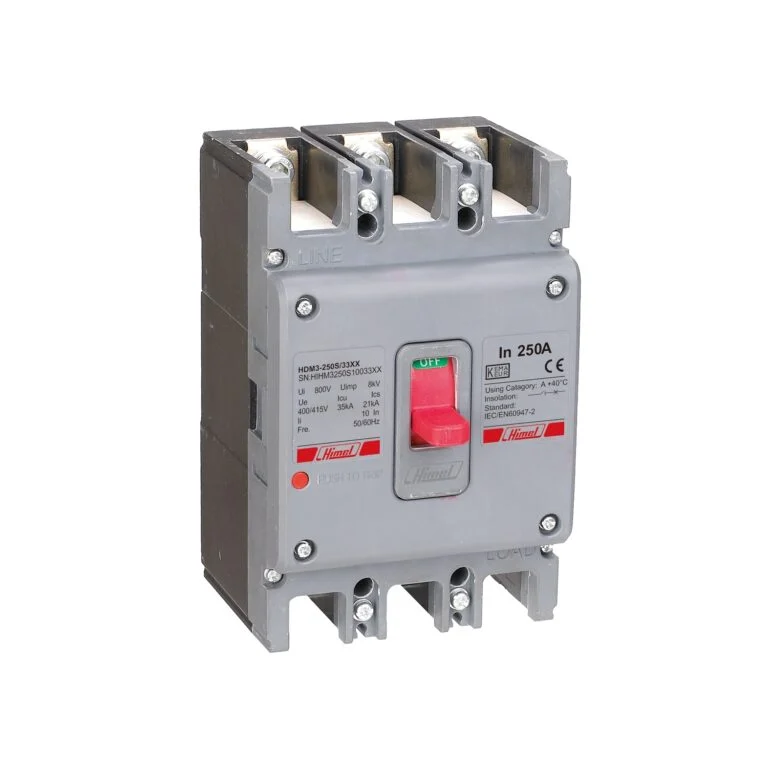
MCCB or MCB? How breaking capacity, the IEC 60898-1 and IEC 60947-2 standards, selectivity and temperature derating decide the right breaker for each board.
Read more
Soft starter or VFD for your pump? Compare starting current, running energy, harmonics and cost, with a decision matrix by pump duty, worked numbers and Singapore…
Read moreSend us your motor rating, voltage, application and quantity. We'll get back to you fast.