Technical Guides

Choosing a VSD for Commercial HVAC and Cooling Towers
What to look for in a VSD for air handling units, cooling towers and chilled-water pumps: humidity and IP rating, harmonics, BMS protocols and cooling tower…
Read moreThe connected, self-protecting side of the ATV630 — embedded fieldbus, EcoStruxure asset visibility and on-board application logic that turn a motor into a data point on your plant network.
18 June 2026 · 8 min read · Trans-Digi Global

The Schneider Altivar Process ATV630 is a variable speed drive for pumps, fans, compressors and other process equipment that goes beyond speed control: it measures its own power and energy, monitors the process and the motor, runs pump-specific logic, and connects to the plant network over Ethernet. Schneider Electric lists the ATV630 for motors from 1 hp to 500 hp, and describes it as an advanced drive for fluid and gas handling with embedded energy monitoring, information management and process optimisation.
In this article
This article looks at what “smart” means in practice on an ATV630, how it compares with a basic drive, where those features pay back on Singapore projects, and what to settle before you specify one.
Every variable speed drive changes motor speed by changing output frequency and voltage. What separates a process drive from a basic one is what it does with the information it already has. A drive knows its motor current, voltage, speed and power at every moment. NEA’s Motor Driven Systems reference manual notes that modern drives can report speed, current, voltage, power factor, power, cumulative energy and running hours, and can run PID loops that hold a set point such as pressure.
A smart drive turns that data into control and maintenance decisions inside the drive, rather than relying on a separate PLC or a technician’s monthly walk-round.
Schneider Electric’s Singapore product page for the 22 kW ATV630D22N4 highlights five capabilities:
The same page documents a Safe Torque Off (STO) input, a safety function that removes torque-producing power from the motor without disconnecting the supply. Schneider’s Altivar Process ATV600 catalogue describes the wider family’s embedded web server, Ethernet connectivity with Modbus TCP and serial links, energy monitoring, pump optimisation functions and STO safety, with optional communication modules for other fieldbuses.
| ATV630 capability | What it does | Why it matters on site |
|---|---|---|
| Embedded power measurement | Records power and energy at the drive | Gives a baseline and proof of savings without a separate meter per motor |
| Pump optimisation functions | Runs pump logic inside the drive | Fewer separate controllers in the panel |
| Process monitoring and control | Watches the duty as well as the motor | Earlier warning of process problems |
| Asset monitoring and drift monitoring | Tracks the condition of drive, motor and load | Supports planned rather than reactive maintenance |
| Embedded Ethernet with Modbus TCP | Connects to BMS, SCADA or PLC | Set points, status and energy data shared without a gateway |
| Embedded web server | Browser access to settings and data | Faster set-up and diagnosis |
| Safe Torque Off input | Removes torque-producing power from the motor | Supports the machine’s safety design |
The ATV630 product page on our site summarises the same strengths: integrated process and energy-monitoring functions, predictive maintenance features, normal-duty and heavy-duty configurations, and drive, motor and process protection for water and wastewater, manufacturing and infrastructure applications.
Energy savings that are not measured are easily disputed. The US Department of Energy’s Adjustable Speed Drive tip sheet explains that savings depend on the load duty cycle and on drive and motor efficiency at each operating point, which is why it advises using manufacturer data rather than assumptions. A drive that records its own kWh and running hours makes that duty cycle visible.
The underlying physics favours speed control on pumps and fans. The same tip sheet notes that reducing speed by 20% can reduce input power by approximately 50% on centrifugal loads. The Hydraulic Institute and Europump guide Variable Speed Pumping reports savings of 30% to 50% in many pump installations and estimates that 75% of pump systems are oversized, many by more than 20%. For the energy side in detail, see our companion guide to ATV630 energy savings.
Protection that understands the process prevents damage a standard starter cannot see. On pumps, conditions such as running dry, running against a closed valve or operating far from the best efficiency point can show up in the drive’s current and power readings before they show up as a failed seal. The Variable Speed Pumping guide notes that all fixed-speed centrifugal pumps have a minimum flow requirement, and that running below it for extended periods causes problems.
Monitoring is also a maintenance tool. Drift monitoring and asset protection give the facility team a trend to act on, so inspections can be planned rather than triggered by a trip.
Schneider Electric is one of the brands we are authorised partners for, and our partners page explains how we use it: Altivar Process drives are supplied where the project specification names them, and where a specification is open we recommend based on the duty, lead time and budget, with the reasoning stated.
Smart features only help if they are configured and connected. Our testing and commissioning service covers parameter configuration, motor and application settings, PID and set-point configuration, pump cascade, alternation and sleep/wake set-up, BMS and control-system interface verification, functional testing, and commissioning records with recorded parameter and protection settings for handover.
Across our project references, three points come up repeatedly, whatever the drive brand:
A drive with embedded energy measurement makes the third point much easier to prove.
It is a process variable speed drive for pumps, fans, compressors and similar equipment in water, industrial and infrastructure applications, with embedded energy and process monitoring.
Schneider Electric lists the ATV630 for motors from 1 hp to 500 hp. Confirm the exact reference against your motor’s rating, voltage and duty.
Yes. Schneider highlights embedded power measurement and an energy dashboard on the ATV630, which helps verify savings without a separate meter on each motor.
Yes. The ATV600 family has embedded Ethernet with Modbus TCP and serial communication, with option modules for other fieldbuses. Confirm the protocol at the specification stage.
Not always. For straightforward building-services duties, an HVAC or pump-specific drive may be enough. The ATV630 suits applications that need process monitoring, energy data and deeper protection.
Send your motor rating, voltage, control network and application through our contact page, and we will confirm the reference and lead time. For a building HVAC alternative, see our guide to the Schneider ATV212, or read how VSDs improve motor efficiency.
Send Jason the model or your motor rating — we'll confirm availability the same business day.
WhatsApp UsWhat to look for in a VSD for air handling units, cooling towers and chilled-water pumps: humidity and IP rating, harmonics, BMS protocols and cooling tower…
Read more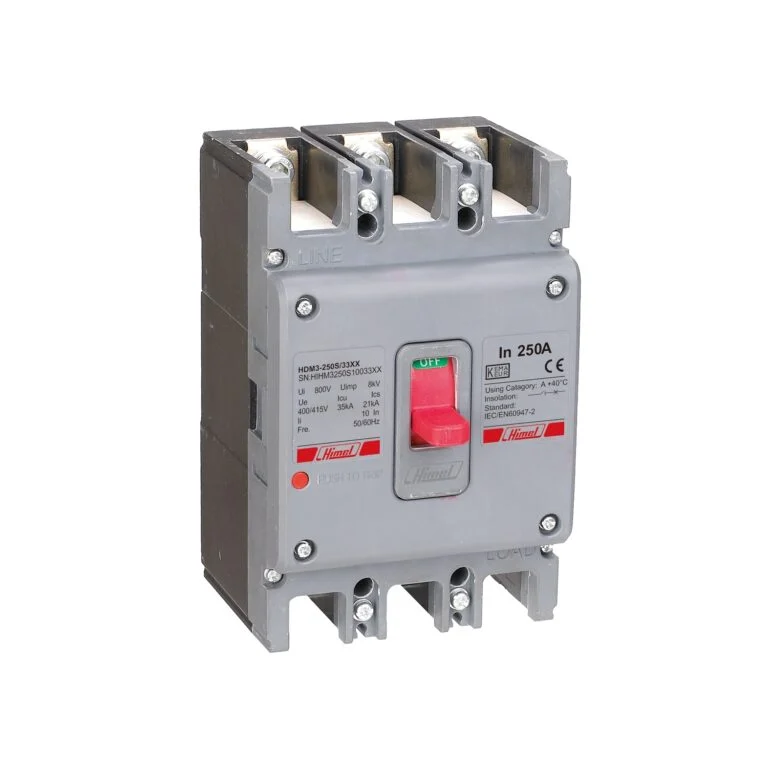
MCCB or MCB? How breaking capacity, the IEC 60898-1 and IEC 60947-2 standards, selectivity and temperature derating decide the right breaker for each board.
Read more
Soft starter or VFD for your pump? Compare starting current, running energy, harmonics and cost, with a decision matrix by pump duty, worked numbers and Singapore…
Read moreSend us your motor rating, voltage, application and quantity. We'll get back to you fast.