Technical Guides

Choosing a VSD for Commercial HVAC and Cooling Towers
What to look for in a VSD for air handling units, cooling towers and chilled-water pumps: humidity and IP rating, harmonics, BMS protocols and cooling tower…
Read moreA drive built specifically for building services — quieter, BMS-ready and tuned to trim pump and fan energy where the affinity-law savings are biggest.
12 June 2026 · 9 min read · Trans-Digi Global
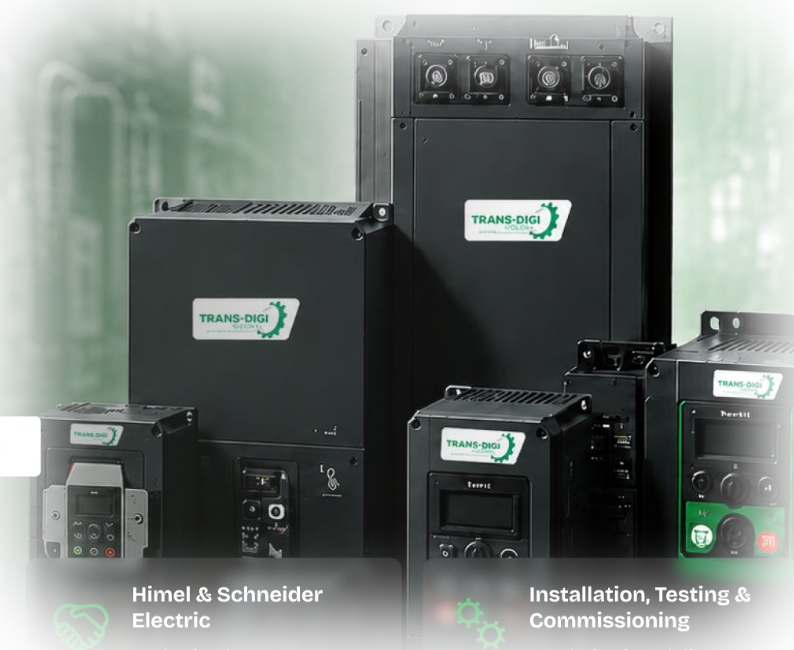
The Schneider Altivar 212 (ATV212) optimises energy in building HVAC systems by running fans, pumps and compressors at the speed the building actually needs, rather than at full speed with dampers or valves doing the throttling. Schneider Electric positions it as an HVAC variable speed drive for 0.75 kW to 75 kW motors with simple integration into building management systems, and its C-Less design keeps input current distortion at roughly 30% to 35% THDi without extra line filters.
In this article
This guide covers where HVAC energy goes, the techniques an ATV212 uses to cut it, a worked savings example in Singapore dollars, and what to check when specifying HVAC drives for a Singapore building.
Air-conditioning runs for long hours in Singapore’s climate, and almost all of it is driven by motors: chillers’ compressors, chilled-water and condenser-water pumps, cooling tower fans, and air-handling unit (AHU) fans. The IEA 4E Electric Motor Systems Platform estimates that motor systems account for 36% of electricity used in buildings worldwide, and NEA’s Motor Driven Systems reference manual cites motor systems at 38% of commercial electricity consumption.
Most HVAC equipment is sized for peak load, but peak conditions are rare. The NEA manual notes that motor systems are generally designed for maximum load yet run at full capacity only for short periods, so many operate inefficiently for long periods. That gap between design and actual load is what a drive recovers.
Fans and centrifugal pumps follow the affinity laws: flow changes in proportion to speed, but power changes with the cube of speed. The US Department of Energy’s Adjustable Speed Drive tip sheet puts it practically: reducing equipment speed by 20% can reduce input power by approximately 50%. Its worked example of an exhaust fan at half speed shows input power falling by 82.9%, even after allowing for lower motor and drive efficiency at that load.
| AHU fan speed | Airflow (approx.) | Fan power (ideal) |
|---|---|---|
| 100% | 100% | 100% |
| 90% | 90% | 73% |
| 80% | 80% | 51% |
| 70% | 70% | 34% |
| 60% | 60% | 22% |
The short answer: a VFD on an air handling unit (AHU) fan varies the fan speed so the airflow follows the cooling load, usually holding the duct static pressure or supply air temperature at its set point, instead of moving the same volume of air all day. Because fan power falls roughly with the cube of speed, an AHU fan delivering 80% of its design airflow needs only about half the power, as the table above shows.
An AHU is the unit that filters, cools and dehumidifies air and blows it through the ductwork. There are three common ways to reduce its airflow at part load, and NEA’s Motor Driven Systems reference manual compares them:
| Airflow control | How it works | Energy effect (per NEA manual) |
|---|---|---|
| Constant air volume, fixed-speed fan | Airflow stays fixed; capacity is changed by varying the supply air temperature | Wastes energy by supplying a constant volume of air whatever the load, and leads to high space humidity at low loads |
| Discharge damper or inlet guide vanes | Fan runs at full speed while dampers or vanes restrict the air | Reduces airflow, but savings are “much less than using VSDs” |
| Variable speed drive | Fan speed is reduced to deliver only the air needed | Closely follows the theoretical cubic fan power relationship |
How slow can an AHU fan run? Most motors are cooled by a fan on their own shaft, so very low speeds can overheat them. NEA’s manual notes that in many applications the motor speed can be reduced to about 40% of rated speed without overheating. Where the airflow passes over the motor, as in AHUs and cooling towers, the air stream helps cool it, so speed can be reduced below 50% of rated speed. The practical minimum also depends on the building’s ventilation and humidity requirements, which the control strategy has to respect.
What to specify: the fan motor kW and full-load current, the control signal (duct static pressure or supply air temperature), minimum and maximum speeds, and the BMS protocol. On our Global Indian International School project, described below, the AHU drives had to meet the control accuracy needed to maintain cooling capacity in classrooms and laboratories.
The biggest single gain comes from removing throttling. A constant-speed AHU fan with inlet vanes or a chilled-water pump with a balancing valve partly closed still draws close to full power. The Hydraulic Institute and Europump guide Variable Speed Pumping states that flow control by speed regulation is always more efficient than control by valve, and reports savings of 30% to 50% in many pump installations.
The ATV212 includes PID control and energy-management functions, according to its product specification. A pressure sensor on the chilled-water header or a static pressure sensor in the supply duct feeds the drive, which trims speed to hold the set point. As NEA’s manual describes, the drive compares the sensor signal, typically 0–10 V or 4–20 mA, with the set point and varies the pump or fan speed to match.
A fixed pressure set point chosen for peak load wastes energy at part load. Lowering the duct static pressure or differential pressure set point when demand falls lets the drive run slower. This is usually done from the BMS, which is why the drive’s building-automation communication matters.
Schneider describes the Altivar 212 as offering simple integration to building management systems and automation platforms, and its Singapore product page highlights centralised technical management and instant viewing of energy consumption. Schedules, set-point resets and energy trends then sit in one place for the facility team.
Every drive draws non-sinusoidal current. Schneider’s ATV212 harmonics FAQ explains that its C-Less technology reduces harmonics to approximately 30% to 35% THDi without a line choke, DC choke or passive filter, and that where a lower limit is required, an active harmonic filter at the point of common coupling is the recommended solution. Project limits are usually written with reference to IEEE 519, so check the specification before ordering.
Consider an 11 kW AHU supply fan that runs 12 hours a day, 365 days a year, and can operate at 80% speed for most of those hours once a drive and static pressure control are in place:
Commercial buildings on retail electricity contracts pay different rates, and real savings depend on the duty profile, so treat this as an order of magnitude and measure the baseline before and after.
| HVAC application | Control signal | Energy technique |
|---|---|---|
| AHU supply and return fans | Duct static pressure or supply air temperature | Speed control, set-point reset |
| Chilled-water secondary pumps | Differential pressure | PID speed control replacing valves |
| Condenser-water pumps | Flow or temperature difference | Speed matched to chiller load |
| Cooling tower fans | Condenser-water temperature | Fan speed follows heat rejection need |
| Ventilation and exhaust fans | CO or CO₂ level, or schedule | Demand-based speed |
Schneider’s product range page summarises the ATV212’s role as managing fans, pumps and compressors efficiently. For large process pumps or applications that need deeper process monitoring, the Altivar Process ATV630 is the step up.
Our HVAC drive references in Singapore use Himel drives, but the commissioning lessons apply to any HVAC drive, including the ATV212.
Our testing and commissioning service covers drive parameter configuration, PID and set-point set-up, BMS interface verification and handover documentation.
Trans-Digi Global is an authorised partner for Schneider Electric and Himel. Where a specification names the ATV212, we supply it as specified; where it is open, we compare it with alternatives such as the Himel Smart Pump Series and explain the trade-offs in duty, lead time and cost.
For related reading, see how variable speed drives improve motor efficiency and the Schneider ATV630 for smart motor control.
Related reading: choosing a VSD for commercial HVAC and cooling towers.
It is an HVAC variable speed drive for fans, pumps and compressors in buildings, covering motors from 0.75 kW to 75 kW, with building-automation communication and PID control.
Savings depend on how far speed can be reduced. On fans and pumps, a 20% speed reduction can cut input power by about half, and pump retrofits commonly report 30–50% savings.
Yes, where airflow or water flow varies through the day, because a fan or pump at reduced speed draws far less power. In the worked example above, an 11 kW AHU fan running at 80% speed for 12 hours a day saves about 22,200 kWh, or roughly S$6,400 a year at the regulated tariff before GST. NEA’s manual cites motor systems at 38% of commercial electricity consumption, so fans and pumps are a large part of the bill. The US DOE tip sheet is clear that drives do not save energy where equipment runs close to full load most of the time, so measure the duty profile first.
Its C-Less design keeps THDi at roughly 30–35% without line chokes or passive filters. If the project limit is lower, Schneider recommends an active harmonic filter at the point of common coupling.
Yes. Schneider describes simple integration with building management systems and automation platforms. Confirm the protocol and points list during design.
AHU supply and return fans, chilled-water and condenser-water pumps, cooling tower fans and ventilation fans, typically controlled by pressure, temperature or air-quality signals through the drive’s PID or the BMS.
Send the motor rating, voltage, quantity and BMS requirements through our contact page.
Send Jason the model or your motor rating — we'll confirm availability the same business day.
WhatsApp UsWhat to look for in a VSD for air handling units, cooling towers and chilled-water pumps: humidity and IP rating, harmonics, BMS protocols and cooling tower…
Read more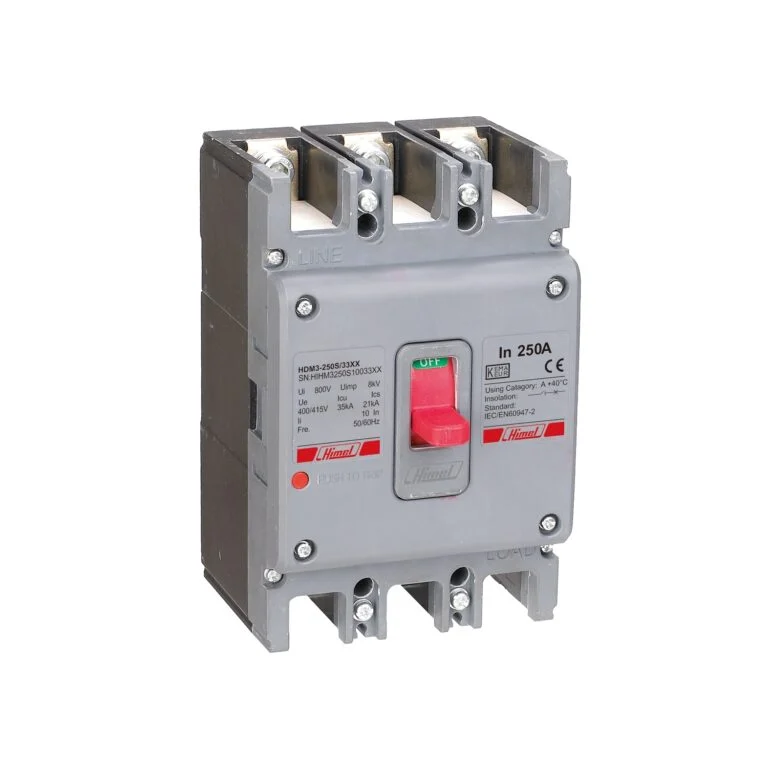
MCCB or MCB? How breaking capacity, the IEC 60898-1 and IEC 60947-2 standards, selectivity and temperature derating decide the right breaker for each board.
Read more
Soft starter or VFD for your pump? Compare starting current, running energy, harmonics and cost, with a decision matrix by pump duty, worked numbers and Singapore…
Read moreSend us your motor rating, voltage, application and quantity. We'll get back to you fast.