Technical Guides

Choosing a VSD for Commercial HVAC and Cooling Towers
What to look for in a VSD for air handling units, cooling towers and chilled-water pumps: humidity and IP rating, harmonics, BMS protocols and cooling tower…
Read moreTo replace a variable speed drive on site, first prove the drive has actually failed, then record everything the old unit was doing before you remove it. Choose a replacement with the same supply voltage, an output current equal to or above the motor's full-load current, and the control and communication functions the system relies on.
To replace a variable speed drive on site, first prove the drive has actually failed, then record everything the old unit was doing before you remove it. Choose a replacement with the same supply voltage, an output current equal to or above the motor’s full-load current, and the control and communication functions the system relies on. Install it under a proper lock-out, and commission it against a written checklist: motor data, autotune, I/O, set points, protections, the building management system (BMS) interface and a witnessed run test.
In this article
A variable speed drive (VSD), also called a variable frequency drive (VFD), records why it stopped. That fault code is the first piece of evidence. Schneider’s Altivar Process ATV600 programming manual lists the probable causes behind each code, and most of them sit outside the drive.
| Fault shown | Probable causes listed by the manufacturer | Check before condemning the drive |
|---|---|---|
| Overcurrent (OCF) | Wrong motor parameters, load or inertia too high, mechanical locking, autotune not matching the motor | Pump free to turn? Motor data correct? |
| Motor or earth short circuit (SCF1, SCF3) | Short between output phases or to earth, insulation fault in motor or cable, long motor cable | Insulation test of motor and cable, with the drive disconnected |
| DC bus overvoltage (OBF) | Deceleration too short, high mains voltage, braking circuit unable to absorb energy | Decel time, supply voltage |
| Supply undervoltage (USF) | Supply too weak | Incoming voltage, upstream breaker and connections |
| Input phase loss (PHF) | Tripped fuse, missing phase, loose connection | Fuses, terminations |
| Drive overheating (OHF) | High ambient temperature, blocked airflow, failed cooling fan | Panel temperature, filters, fans, heat sink |
| Motor overload (OLF) | Excessive motor current | Pump duty, motor thermal settings |
If the drive shows no display with a healthy supply, has visible damage, or the same power-stage fault returns immediately with the motor disconnected, replacement is the likely answer. The Himel Smart Pump Series (HAVSP) datasheets list a similar set of protections: overcurrent, overvoltage, undervoltage, overheating, overload, short circuit and hammer effect.
Heat and dirt are the usual suspects. The overheating fault above names ambient temperature, blocked air and cooling fans as causes. With mean daily maximum temperatures of 30.5–32.4 °C and mean annual relative humidity around 82% (Meteorological Service Singapore), panel ventilation and filter cleaning matter here. Age is the other factor: in our replacement work the outgoing units are often drives that have been in service for many years.
Collect this before you order, ideally before the old drive is taken out. It is the difference between a one-visit swap and a second shutdown.
With that list, matching a replacement becomes a straightforward comparison. The table shows how the old drive’s features map to a new one, using the Himel HAVSP and X Series as examples.
| What the old drive does | What the replacement must match | Example from the datasheets |
|---|---|---|
| Runs the motor at rated load | Continuous output current at or above motor FLC, same supply voltage | HAVSP 15 kW: 32 A continuous, 380–480 V three-phase |
| Holds pressure or temperature | PID control, sleep and wake | HAVSP: adjustable PID regulator with sleep mode |
| Talks to the BMS | Same protocol and points | HAVSP: Modbus; X Series options include Modbus TCP and BACnet MS/TP |
| Runs duty and standby pumps | Multi-pump control or external controller | HAVSP: multi-pump control |
| Must keep running in a fire | Fire override or forced-run mode | HAVSP: fire override mode; ATV630: Forced Run parameter |
| Fits the existing panel | Dimensions, IP rating, clearances | HAVSP 15 kW: 150 × 259 × 181 mm, IP20 |
For the current-matching step, our guide to VFD sizing for pumps walks through the method with a worked example.
The Energy Market Authority states that all electrical works must be undertaken by a licensed electrical worker, and the Workplace Safety and Health (General Provisions) Regulations include a regulation on lock-out procedures. Plan the swap around both. For building services, also agree the outage with the facility manager, since the pump or fan is out of service until commissioning is complete.
Commissioning is where a replacement either works for the next ten years or becomes the next fault call. Our testing and commissioning service follows these steps, with records handed over at the end.
The Variable Speed Pumping guide from the Hydraulic Institute, Europump and the US Department of Energy explains why step 9 matters: with variable speed, excitation frequencies change, which makes resonance within the operating speed range more likely than at fixed speed.
Our case studies document replacement work across residential, public and commercial buildings. Each involved fitting new drives to an existing system, then configuring, testing and commissioning them.
| Project | Old drives | Replacement | Application | What mattered most |
|---|---|---|---|---|
| Boathouse Residences | Japanese-brand VSDs | Himel HAVSP Smart Pump Series | Basement carpark ventilation | System configuration and commissioning; the system then supported the SCDF fire test |
| HDB estates, four Town Councils | Existing Japanese VSDs | 100+ Himel HAVSP | Fire pump systems | Parameter settings for each fire pump application |
| Singapore Polytechnic | Existing campus fan VSDs | About 30 Himel HAVSP | Campus ventilation fans | Configuring the new drives to the existing campus controls |
| Seletar Mall | Japanese-brand VSDs | 33 Himel Smart Pump Series, 0.75–15 kW | Cooling towers, chilled-water and condenser-water pumps, carpark fans | Covering four applications and a range of ratings during A&A works |
At Boathouse Residences, Frasers Property engaged us to replace the drives on the basement carpark ventilation fans. Carpark ventilation is part of a building’s smoke-control arrangement, which the SCDF Fire Code, Clause 7.4 covers, including smoke purging and ductless jet fan systems. After parameter verification, testing and commissioning, the upgraded system supported the condominium’s SCDF fire test.
The HDB fire pump programme shows the scale side. More than 100 drives were supplied, tested and commissioned across estates under Holland-Bukit Panjang, Tanjong Pagar, West Coast and Jalan Besar Town Councils, with the required parameter settings for each fire pump application. Fire pumping systems must have redundancy under SCDF Fire Code Clause 6.8, so performance is not affected when one pump or its control system is out of service.
At Singapore Polytechnic, the main challenge was compatibility: the new drives had to operate correctly with the campus’s existing control system, so parameter configuration for each ventilation fan was central to the job. At Seletar Mall, the replacement was part of Additions and Alterations works at an operating retail property. And at Singapore EXPO, the new drives were commissioned on motors that had been in service for more than ten years, which were kept.
These are the points that most often turn a simple swap into a repeat visit.
Repair can make sense for large drives with good parts support. For the small and mid-size drives in most building plant rooms, replacement is usually faster and more certain, especially when the original model is discontinued and spares are scarce. Our technical support includes replacement planning for ageing or discontinued equipment. When comparing options, check the replacement’s documentation against IEC 61800-5-1, the safety standard for adjustable speed drive systems. For background on how a modern drive protects the motor, see our article on the Himel HAVXS Expert VSD, and for the energy side, how VSDs improve motor efficiency.
Send us the motor nameplate, the old drive’s model and a photo of its wiring through our contact page. We will confirm a compatible replacement, check stock, and quote for supply alone or supply with installation, testing and commissioning.
Confirm the drive has failed, record the motor and drive data, parameters and wiring, and choose a replacement with the same supply voltage, enough output current and the same control functions. A licensed electrical worker then isolates and locks out the supply, waits for the DC bus to discharge, installs the new drive and commissions it against a checklist.
You need the motor nameplate, the old drive’s model and rated current, its parameter list, what is wired to each input and output, the BMS protocol and address, any special functions such as PID, multi-pump or fire mode, and the panel space, mounting and IP rating.
Enter the motor nameplate data, run an autotune with the motor cold, set motor protection, speed limits and ramps, prove every input and output, set up PID and pump functions, check the BMS points, test fire or smoke-control modes, then do a run test and record the final parameters.
Motor data and autotune, thermal protection, minimum and maximum speed, ramp times, I/O tests, set points and feedback scaling, BMS communication, life-safety modes, direction of rotation, motor current at duty, resonance checks, and a saved parameter file with the commissioning record.
Read the fault code first. Overcurrent, short-circuit, overvoltage, undervoltage, phase-loss and overheating faults often point to the motor, cable, supply, settings or panel cooling. Check those, including an insulation test with the drive disconnected, before deciding the drive itself has failed.
The Energy Market Authority requires all electrical works to be carried out by a licensed electrical worker. Work should also follow a lock-out procedure under the Workplace Safety and Health regulations.
Send Jason the model or your motor rating — we'll confirm availability the same business day.
WhatsApp UsWhat to look for in a VSD for air handling units, cooling towers and chilled-water pumps: humidity and IP rating, harmonics, BMS protocols and cooling tower…
Read more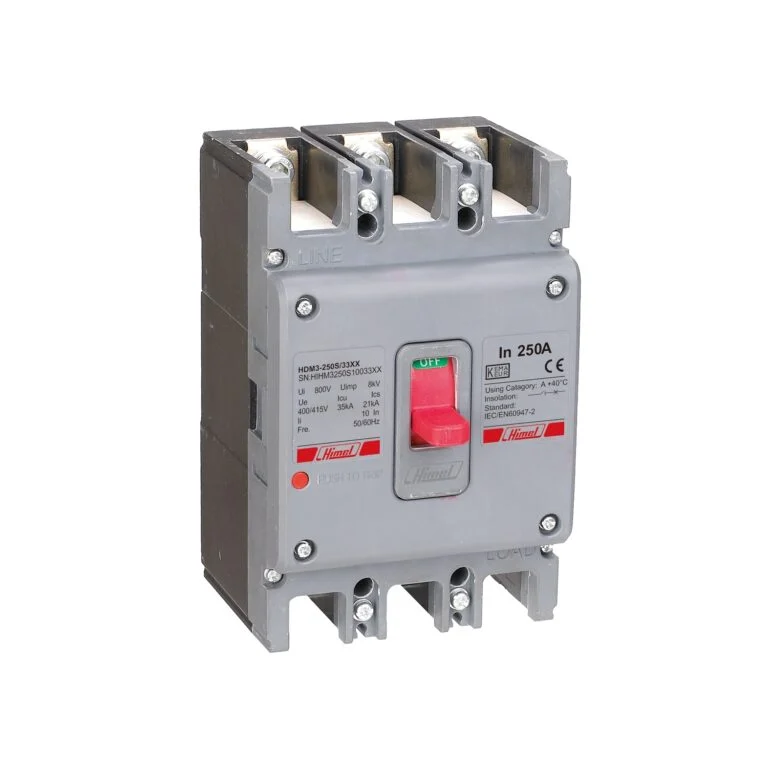
MCCB or MCB? How breaking capacity, the IEC 60898-1 and IEC 60947-2 standards, selectivity and temperature derating decide the right breaker for each board.
Read more
Soft starter or VFD for your pump? Compare starting current, running energy, harmonics and cost, with a decision matrix by pump duty, worked numbers and Singapore…
Read moreSend us your motor rating, voltage, application and quantity. We'll get back to you fast.