Technical Guides

Choosing a VSD for Commercial HVAC and Cooling Towers
What to look for in a VSD for air handling units, cooling towers and chilled-water pumps: humidity and IP rating, harmonics, BMS protocols and cooling tower…
Read moreVFD sizing for a pump starts with the motor's full-load current, not its kW. Choose a variable frequency drive (VFD) whose normal-duty continuous output current is at least the motor's nameplate current, confirm the supply, then correct for panel temperature, enclosure and starting duty.
VFD sizing for a pump starts with the motor’s full-load current, not its kW. Choose a variable frequency drive (VFD) whose normal-duty continuous output current is at least the motor’s nameplate current, confirm the supply, then correct for panel temperature, enclosure and starting duty. For most centrifugal pumps that means a drive of the same kW as the motor; positive displacement pumps usually need a heavy-duty rating, typically one frame size larger.
In this article
The short answer is a drive whose rated output current covers the motor’s full-load current at the voltage you are running. A variable frequency drive, also called a variable speed drive (VSD), controls the speed of an AC motor by changing the frequency and voltage it supplies. Its power stage is rated in amps. The kW figure assumes a typical four-pole motor; two motors of the same kW can draw different currents, so kW is a starting point and current is the test.
The datasheets for the drives we supply show this clearly. The Himel Smart Pump Series (HAVSP) 15 kW model, HAVSP4T0150P, is rated at 32 A continuous output in normal duty, with 38.4 A available for one minute. The Schneider Altivar Process ATV630 15 kW model, ATV630D15N4, is rated at 31.7 A continuous in normal duty according to the Altivar Process ATV600 catalogue.
Drive ratings are specified in current, overload and environmental terms; IEC 61800-2 lists these rating criteria for adjustable speed AC drive systems. Most drive makers also publish two ratings for the same hardware, and choosing between them is the most important decision in sizing.
Centrifugal pumps are “variable-torque” loads whose power falls with roughly the cube of speed. The US Department of Energy’s Motor Systems Tip Sheet #11 lists positive displacement pumps among “constant torque” loads, where torque does not fall with speed. That is the dividing line between normal and heavy duty for pumps.
| Drive (15 kW class, 380–480 V) | Duty | Motor power | Continuous output current | Short-term overload |
|---|---|---|---|---|
| Himel HAVSP4T0150P | Normal duty | 15 kW | 32 A | 38.4 A for 1 min |
| Himel HAVSP4T0185P | Normal duty | 18.5 kW | 37 A | 44.4 A for 1 min |
| Schneider ATV630D15N4 | Normal duty | 15 kW | 31.7 A | 34.9 A for 60 s |
| Schneider ATV630D18N4 | Heavy duty | 15 kW | 31.7 A | 47.6 A for 60 s |
| Schneider ATV630D22N4 | Normal duty | 22 kW | 46.3 A | 50.9 A for 60 s |
Figures from the Himel HAVSP datasheets and the Schneider ATV600 catalogue. The ATV630D18N4 row shows heavy duty in practice: an 18.5 kW frame runs a 15 kW motor to gain the extra overload.
Work from the hydraulics to the motor to the drive, in that order. The Variable Speed Pumping guide published by the Hydraulic Institute, Europump and the US Department of Energy puts it plainly: start the sizing exercise with the hydraulic system, then select the pump, motor and drive, and avoid oversizing each component.
An illustrative building water booster duty (pump figures and nameplate current are example inputs; drive ratings are from datasheets):
Now the energy case. At full output the set draws about 14 kW, assuming about 97% drive efficiency (the DOE tip sheet gives 96–97% for 20–30 hp drives at 75–100% load) and 91% motor efficiency. Over 4,000 hours that is about 56,000 kWh, or S$16,000 a year at SP Group’s regulated tariff of 28.59 cents/kWh before GST (October to December 2026); retail contract rates differ. A 30% cut, the low end of the 30–50% the Variable Speed Pumping guide reports for many pump installations, saves about 16,800 kWh, or S$4,800 a year.
A booster set has static head, so treat the cube law with care: the same guide warns that applying the affinity laws to systems with static head “can also lead to major errors”. A Hydraulic Institute booster set case study shows a realistic result: replacing two on/off pumps with three VFD-controlled vertical multistage pumps holding a constant 80 psi cut the electricity bill from US$21,500 to US$16,000 a year, about 26%, with a payback of 1.8 years. Our article on how the ATV630 cuts pump and fan energy goes further into savings estimates.
The duty rating, control features and any regulatory constraints change with the application. Use this as a starting point alongside the pump curve and nameplate.
| Application | Load type | Usual duty rating | What else to check |
|---|---|---|---|
| Domestic water booster set | Variable torque, with static head | Normal duty | PID pressure control, sleep mode, minimum speed, multi-pump staging |
| Chilled-water and condenser-water pumps | Variable torque, mostly friction head | Normal duty | BMS interface, differential pressure set point |
| Cooling tower fans | Variable torque | Normal duty | Outdoor or humid location, enclosure rating |
| Sump, transfer and wastewater pumps | Variable torque | Normal duty | Pump-cleaning and dry-run functions |
| Fire pumps | Variable torque | Normal duty, per the fire engineer’s design | SCDF redundancy, fire override mode |
| Screw, gear and progressive cavity pumps | Constant torque | Heavy duty | Starting torque, low-speed motor cooling |
For fire pumping systems, Clause 6.8 of the SCDF Fire Code 2023 requires redundancy so that system performance is not affected when one pump or its control system is out of service. The HAVSP datasheet lists a fire override mode among its pump functions, alongside multi-pump control, dry-run protection and pump cleaning.
For duty and standby sets, one drive per pump is usual, so a single drive fault does not stop the set. Drives with built-in multi-pump control, such as the HAVSP and the Himel X Series HAVXP, can stage assist pumps and alternate duty without a separate controller.
Singapore sits close to sea level, so altitude derating does not apply. Heat and humidity do matter. The Meteorological Service Singapore climate records give mean daily maximum temperatures of 30.5–32.4 °C and a mean annual relative humidity of about 82%. A drive’s rating applies to the air around it, which inside a closed plant-room panel can be well above the outdoor figure.
Motors matter too. Singapore’s Minimum Energy Performance Standards for motors, introduced from 1 October 2018 following an NEA public consultation, are set at the IE3 (Premium) level, so most new pump motors you will be sizing a drive for are IE3. The Variable Speed Pumping guide notes that VFDs can be fitted to most existing motors on 400 V networks.
More references are on our case studies page, and our article on reducing energy waste with the Himel Smart Pump Series covers the pump functions in more depth.
These are the errors the manuals and DOE guidance warn about, and the ones we check for.
Send us the motor nameplate photo, pump duty and supply voltage, and we will confirm the rating, check stock and quote. Our services cover product selection and sizing, installation and panel integration, and testing and commissioning. Replacing a drive that has failed? Our guide on how to replace a variable speed drive on site covers troubleshooting and commissioning. You can browse our full variable speed drive range or contact us directly.
Choose a drive whose continuous output current is at least the motor’s nameplate full-load current, using the normal-duty rating for a centrifugal pump. A 15 kW, 400 V motor with a 28.5 A nameplate current suits a 15 kW drive rated 31.7–32 A. Step up a size for heavy duty or a hot panel.
Work out shaft power from the pump’s flow and head, select the motor, then pick the drive from the motor’s nameplate current. Choose normal or heavy duty from the load type, apply derating, and size cables and protection from the drive’s input current.
Centrifugal pumps are variable-torque loads, so normal duty is usually correct. Positive displacement pumps such as screw, gear and progressive cavity pumps are constant-torque loads and usually need heavy duty, which is typically one drive size larger for the same motor.
Yes. A larger drive is the normal way to gain heavy-duty overload or cope with a hot panel. Enter the motor’s nameplate data and thermal current so the drive protects the motor, not itself.
The method is the same anywhere: motor current, load type and derating. Locally, check panel temperature and humidity, expect IE3 motors under the national standard, and follow SCDF Fire Code redundancy rules for fire pumps.
It depends on the load profile and static head. Hydraulic Institute, Europump and US DOE guidance reports 30–50% in many pump installations; one booster set case study recorded about 26%. High static head means less saving than the affinity laws suggest.
Send Jason the model or your motor rating — we'll confirm availability the same business day.
WhatsApp UsWhat to look for in a VSD for air handling units, cooling towers and chilled-water pumps: humidity and IP rating, harmonics, BMS protocols and cooling tower…
Read more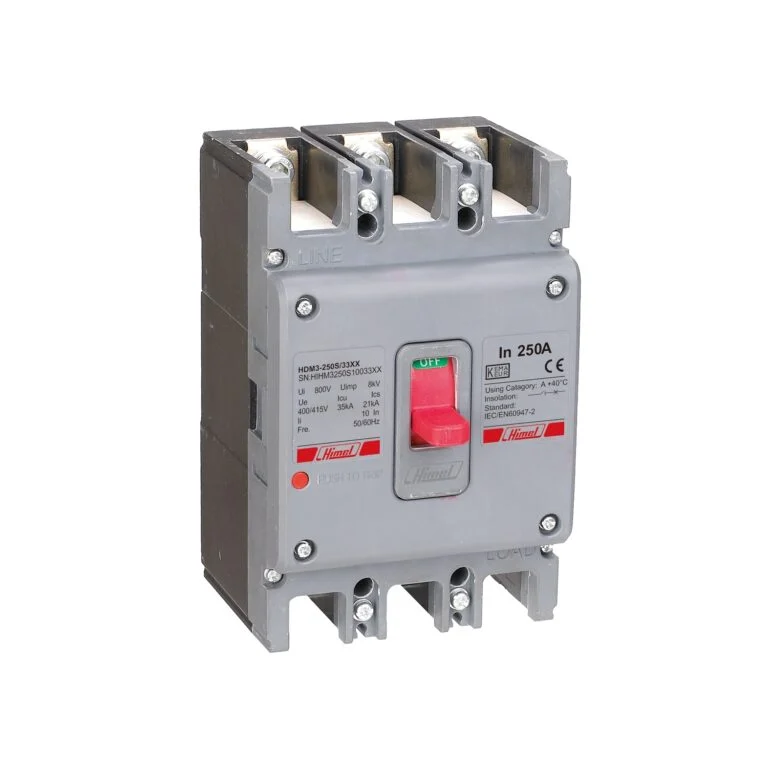
MCCB or MCB? How breaking capacity, the IEC 60898-1 and IEC 60947-2 standards, selectivity and temperature derating decide the right breaker for each board.
Read more
Soft starter or VFD for your pump? Compare starting current, running energy, harmonics and cost, with a decision matrix by pump duty, worked numbers and Singapore…
Read moreSend us your motor rating, voltage, application and quantity. We'll get back to you fast.