Technical Guides

Choosing a VSD for Commercial HVAC and Cooling Towers
What to look for in a VSD for air handling units, cooling towers and chilled-water pumps: humidity and IP rating, harmonics, BMS protocols and cooling tower…
Read moreThe compact, cost-effective soft starter for smooth fixed-speed motor control — where dependable performance and torque-control ramping matter more than advanced connectivity.
30 May 2026 · 8 min read · Trans-Digi Global
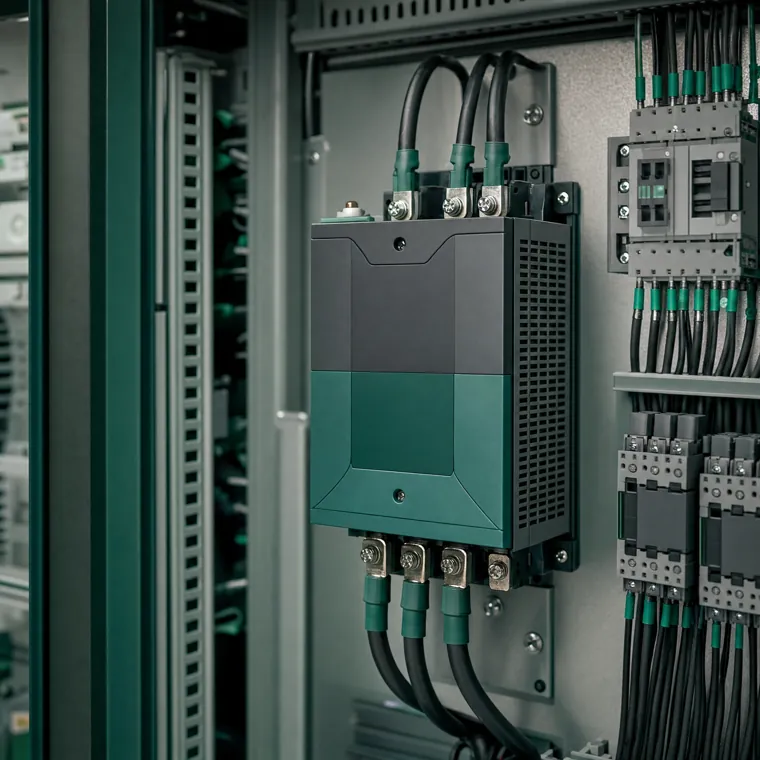
The Schneider Altistart 22 (ATS22) is an all-in-one soft starter for three-phase asynchronous motors from 4 kW to 400 kW. It ramps the motor up and down with torque control and current limiting, then switches to its integrated bypass once the motor is at speed, giving pumps, fans, compressors and conveyors a smooth start without the 6 to 8 times rated current of a direct-on-line start, in a compact unit with built-in motor protection.
In this article
This guide explains how the ATS22 works, how to size and install it correctly in a Singapore switchboard, where it fits against other starting methods, and what we have learned commissioning soft starters on HVAC and fire pump systems.
Many motors do not need variable speed. A fire pump, a fixed-duty transfer pump or a fully loaded compressor runs at full speed whenever it runs. The US Department of Energy’s Adjustable Speed Drive tip sheet notes that variable speed drives do not save energy on equipment that operates close to fully loaded most of the time.
These motors still face the starting problem. Schneider Electric’s guide to DOL starters puts the starting current of a motor switched straight onto the supply at typically 6 to 8 times its rated running current. That surge dips the supply for other equipment, and the sudden torque stresses couplings, belts and pipework. A soft starter solves the start without adding the cost and complexity of a drive.
The ATS22 controls the voltage applied to the motor with thyristors during starting and stopping. Soft starters of this kind are covered by IEC 60947-4-2, the standard for semiconductor motor controllers, starters and soft starters up to 1,000 V AC. Our ATS22 product page lists its key functions:
Schneider’s Singapore product page for the ATS22D47Q adds the practical benefits Schneider claims for the range: smooth starting that avoids mechanical stresses and extends service life, reduced noise for operators, a slim form factor, lower cost to stock spares, and the ability to overcome difficult or high-torque starts. It also publishes motor thermal protection trip curves for a standard Class 10 application.
The current limit is the main lever on a soft starter. Schneider’s ATS22 FAQ states that the current can be limited from 200% to 700% of motor rated current, with a default of 350%.
| Setting | Effect | When to use it |
|---|---|---|
| Lower current limit (towards 200%) | Gentler start, smaller voltage dip, longer starting time | Light loads such as centrifugal fans and pumps on a weak supply or generator |
| Default (350%) | Balanced start | Most pumps and fans |
| Higher current limit (towards 700%) | More starting torque, shorter start | High-inertia or high-torque loads such as loaded conveyors and compressors |
Set it too low and the motor may struggle to reach full speed; set it too high and the benefit over DOL shrinks. The right value is confirmed during commissioning with the actual load.
The ATS22 range runs from 4 kW to 400 kW, according to Schneider’s Altistart 22 range page, with each reference covering a band of motor ratings by supply voltage. The ATS22D47Q, for example, covers 11 kW to 22 kW across 230 V to 440 V.
The starter can also be connected inside the motor’s delta windings, where it carries the winding current rather than the line current. Schneider’s ATS22 product documentation gives this worked example:
Inside-delta connection needs a motor with six accessible terminals and specific wiring, which Schneider documents in the ATS22 user manual. Confirm the motor’s terminal arrangement before choosing this option.
Schneider’s ATS22 installation guidance includes several points that matter in Singapore plant rooms, where ambient temperatures and humidity can be high:
| Option | Starting current | Smooth stop | Speed control | Best for |
|---|---|---|---|---|
| Direct-on-line | Typically 6–8 × rated | No | No | Small motors on a strong supply |
| ATS22 soft starter | Adjustable, 200–700% of rated | Yes | No | Fixed-speed pumps, fans, compressors and conveyors, 4–400 kW |
| ATS480 soft starter | Torque-controlled | Yes | No | Heavier process duties and larger motors up to 900 kW, with connectivity |
| Variable speed drive | Within the drive’s current rating | Yes | Yes | Loads that benefit from running at variable speed |
For pumps, a controlled stop is as valuable as a soft start. The US Department of Energy and Hydraulic Institute sourcebook Improving Pumping System Performance warns that rapid acceleration of large volumes of fluid can cause damaging water hammer, and that soft-starting switchgear can extend system life and improve reliability.
For fire pump circuits, SCDF’s Fire Code 2023, clause 5.2.3 states that thermal overload trips shall not be used in the motor circuits it covers and requires automatically resetting no-volt release, so the soft starter’s protection settings on these circuits must be configured to suit.
Our published soft starter references use Himel’s HASXS Expert Series, and the commissioning lessons apply equally to the ATS22:
Trans-Digi Global is an authorised partner for Schneider Electric and Himel and also supplies the Carlo Gavazzi RSGD and Himel HASES soft starters. Where the specification names the ATS22, we supply it; where it is open, we compare options on duty, lead time and cost. Our services cover sizing, panel integration, parameter set-up, testing and commissioning.
It is an all-in-one soft starter for three-phase asynchronous motors from 4 kW to 400 kW, used on pumps, fans, compressors and conveyors that run at fixed speed.
Yes. The ATS22 has an integrated bypass contactor that takes over once the motor reaches speed, which reduces installation complexity.
The current limit is adjustable from 200% to 700% of motor rated current, with a 350% default, compared with typically 6–8 times rated current for a direct-on-line start.
Yes, on motors with six accessible terminals. The starter then carries the winding current, roughly the line current divided by 1.5, so a smaller unit can be used.
Choose the ATS22 when the motor runs at fixed speed and you only need a smooth start and stop. Choose a drive when the load varies and running at lower speed will save energy.
Send the motor rating, voltage, application and quantity through our contact page. For larger or more demanding duties, see our guide to the Schneider ATS480, and for variable loads, how VSDs improve motor efficiency.
Send Jason the model or your motor rating — we'll confirm availability the same business day.
WhatsApp UsWhat to look for in a VSD for air handling units, cooling towers and chilled-water pumps: humidity and IP rating, harmonics, BMS protocols and cooling tower…
Read more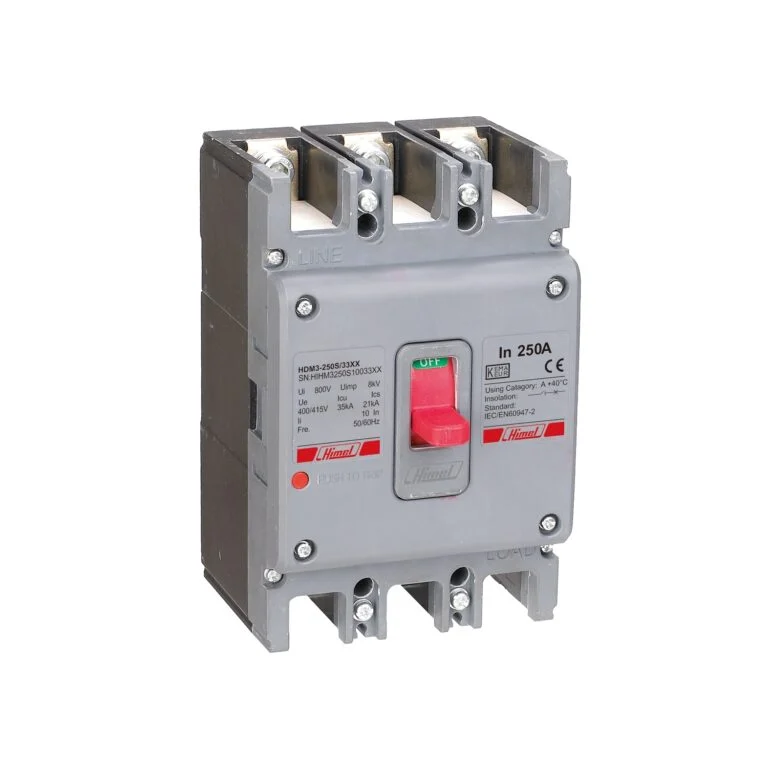
MCCB or MCB? How breaking capacity, the IEC 60898-1 and IEC 60947-2 standards, selectivity and temperature derating decide the right breaker for each board.
Read more
Soft starter or VFD for your pump? Compare starting current, running energy, harmonics and cost, with a decision matrix by pump duty, worked numbers and Singapore…
Read moreSend us your motor rating, voltage, application and quantity. We'll get back to you fast.